Stay stylish and comfortable with the Free crochet Mid-season Sweater Pattern, perfect for handmade charm and a cozy fit during cooler days.
A well-designed sweater for transitional weather combines comfort, style, and versatility. A crochet mid-season sweater pattern provides a practical solution by offering lightweight warmth that is perfect for spring and autumn. Its breathable texture and flexible design allow for easy layering over tops or under jackets, making it suitable for various occasions.
Soft Crochet Mid-Season Sweater Pattern Which Feels Comfy & Chic

Uses and Materials
Uses of the Project
You create a handmade garment that is:
-
Seasonal Wear: Designed as a light, short-sleeved sweater for spring or autumn.
-
Customizable Fit: The top-down construction allows you to easily adjust the width and length to your specific size and preference.
-
Pattern Practice: The repeating motif offers great practice for creating texture and combining different basic stitches.
Materials You Need
Gather these supplies to start:
-
Yarn: Tir yarn from Zeeman (51% Acrylic, 49% Cotton) is used for an intermediate weight and comfortable feel. The tutor suggests finding a substitute yarn with a similar weight-to-length ratio (e.g., 100g = 330m).
-
Quantities: For an estimated size S/M, you will need approximately 3.5 skeins of yarn.
-
Crochet Hooks:
-
4 mm hook (for the main body)
-
3.5 mm hook (for body ribbing)
-
3 mm hook (for collar ribbing)
-
-
Notions: You need several stitch markers, a tapestry needle (wool needle) for weaving in ends, and a pair of scissors.
Special Features
-
Top-Down Construction (Yoke): The sweater is worked in the round, starting from the neckline and increasing to form a squared yoke, which simplifies fitting and eliminates seams.
-
Alternating Two-Row Repeat: The main body of the sweater is created using a two-row repeat:
-
The "Cluster Row" (using DC, Ch 3, DC clusters and SC stitches).
-
The "Relief Row" (using front-post double crochet clusters worked together, separated by Ch 3 and SC).
-
-
Built-in Increases: Increases are only worked in the four corner spaces on the "Cluster Row," not on the "Relief Row," creating a self-shaping square yoke on alternating rows.
-
Elastic Ribbing: The bottom of the body and the sleeve cuffs are finished with a flexible, ribbed border created using single crochet worked in the back loop only.
Level of Difficulty
This project is for Intermediate. While it primarily uses basic stitches, the difficulty lies in managing the consistent two-row repeat, learning the specific technique for the front-post relief cluster stitch that forms the motif, and correctly executing the increases in the four corners of the yoke.
Tutor's Suggestions
-
Measure Before Dividing: After you complete the yoke and before dividing for the sleeves, try on the piece. You must ensure you can easily pinch the fabric together under the armpit without it feeling tight. This confirms the yoke is wide enough.
-
Place Corner Markers: Always use stitch markers to clearly identify the four corner stitches (the SC stitch in the center of the increase) on the "Relief Row." This is crucial for knowing exactly where to place the next round's increase when you return to the "Cluster Row".
-
Change Hook Size for Ribbing: Use smaller hook sizes (3.5 mm for the body, 3 mm for the collar) for the elastic band sections. This naturally tightens the ribbing, ensuring a snug, elastic fit.
-
Count Your Ribbing Rows: When creating the elastic ribbing, count your stitches on the first row of SC (e.g., 7 stitches for the suggested length) and ensure you have that exact number in every row afterward to maintain straight edges.
Crochet Mid-Season Sweater

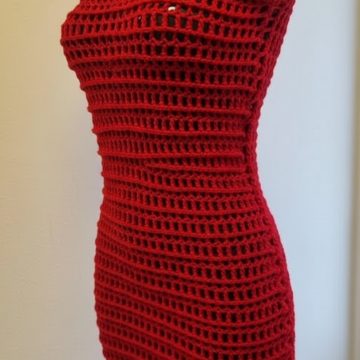
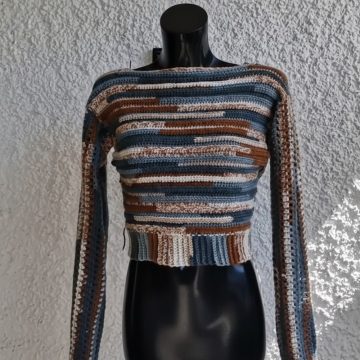
The finished garment often features subtle stitch patterns that add texture and visual interest, giving it a polished yet relaxed look.

To create this sweater, start by selecting yarn suitable for mid-season wear typically a medium-weight, soft material and a crochet hook that ensures even tension. Begin with a gauge swatch to match your stitch tension and body measurements.

Crochet the front, back, and sleeves separately (or use a seamless top-down method), shaping the neckline, armholes, and body as you progress.

After completing the pieces, assemble them if needed, add finishing details such as cuffs or edging, and weave in loose ends.

The completed mid-season sweater is lightweight, comfortable, and versatile a functional and stylish wardrobe staple that adapts effortlessly to changing temperatures.

Step-by-Step Details
This tutorial guides you through making a lightweight garment using a top-down construction method, which starts at the neckline and works downward, featuring a beautiful repeating "star" or "flower" motif achieved using a combination of double crochet clusters and front-post relief stitches. The instructions cover the creation of the yoke, separating the sleeves, and adding an elastic ribbing to the body and sleeves.
Tip
Hide the Working Yarn: When starting the first round of the body or the sleeves after reattaching the yarn, do not just leave the tail hanging. Work over the yarn tail (trap the tail between the hook and the stitch) for the first few stitches. This effectively weaves in the end as you work, securing it and minimizing the final clean-up time.