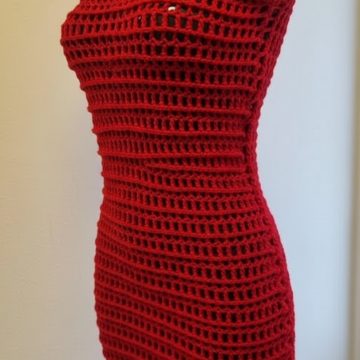
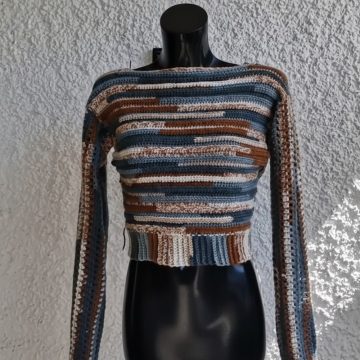
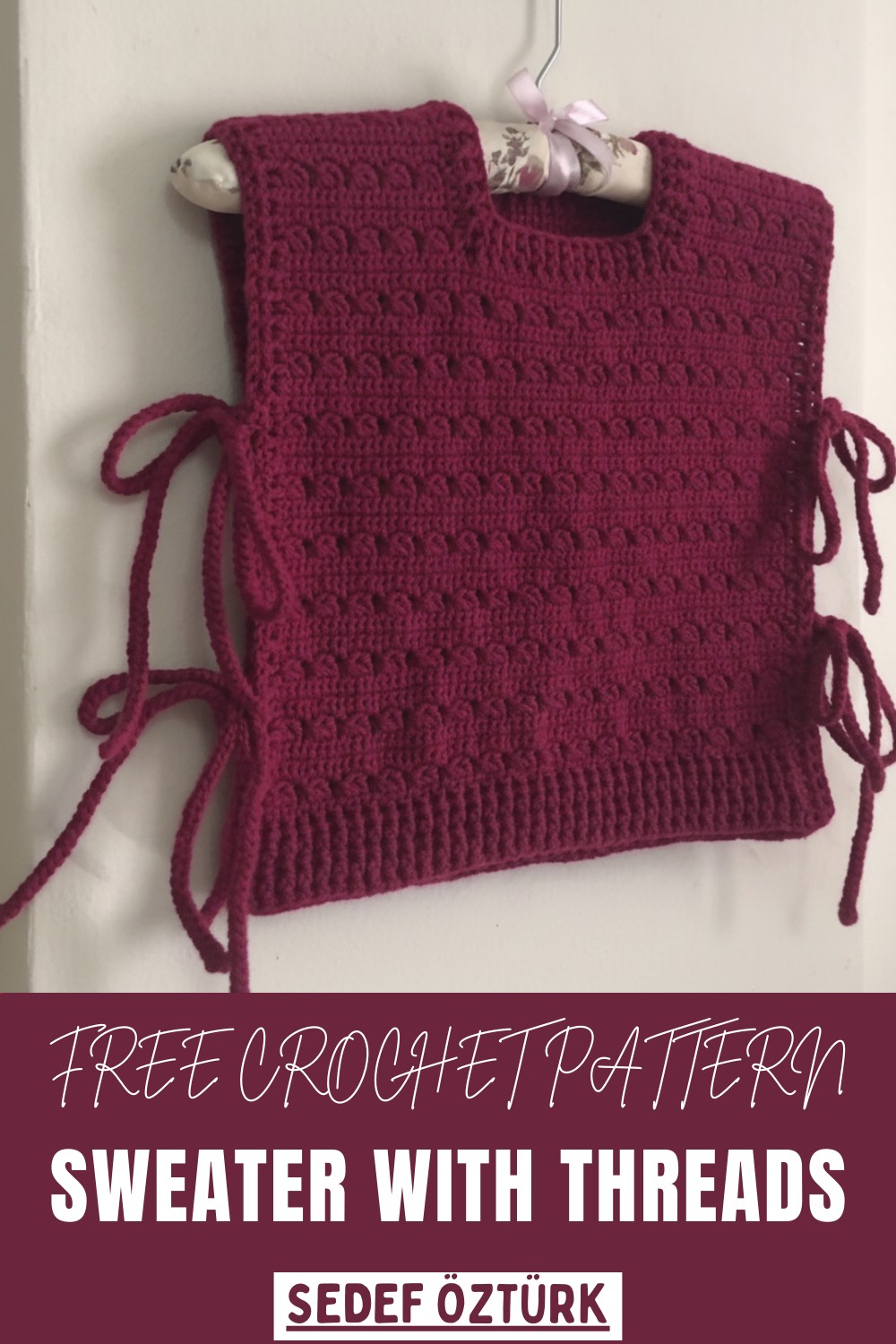
Show off a Free crochet Sweater with Threads Pattern featuring delicate stitches that create a stylish, comfortable layer perfect for cool or breezy days.
Soft threads woven into a cozy sweater can feel like a warm hug and that’s exactly the charm of a crocheted sweater with a threads pattern. When it’s made carefully, it looks delicate and stylish, with fine stitching that gives an almost‑handmade, elegant appearance.
Modern Crochet Sweater with Threads Pattern for Stylish Looks
MATERIALS
Gather these items to begin crocheting:
-
Yarn: Approximately 2 balls of yarn (specifically, Ören Bayan Star yarn was used, but any equivalent bulky/chunky yarn suitable for a 3.5 mm hook will work).
-
Hook: A 3.5 mm crochet hook.
Uses
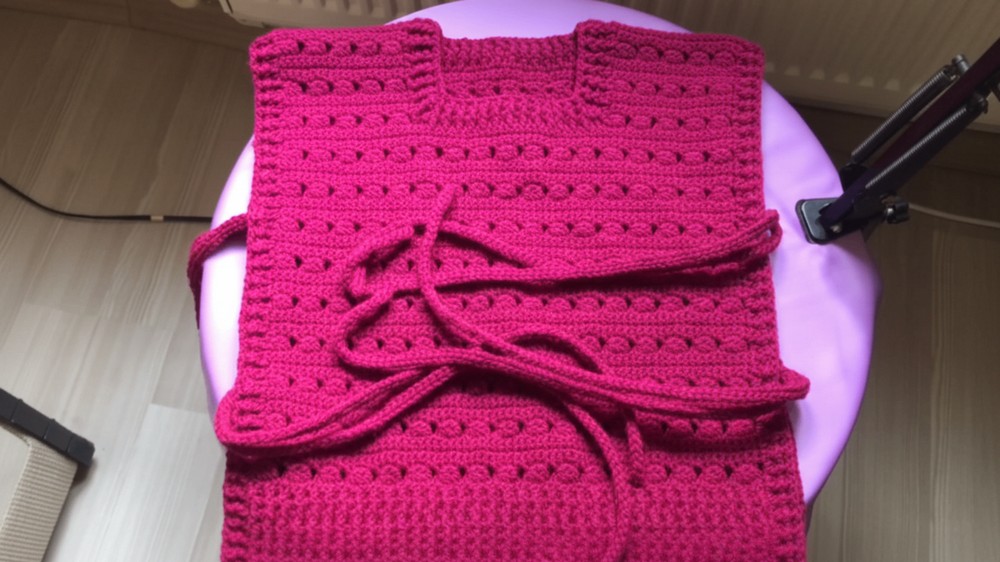
This tutorial guides you in constructing a crocheted vest, specifically sized for a child (approximately 6-7 years old). The pattern is easy to adapt for adult sizes by increasing the initial chain count and the length of the body sections.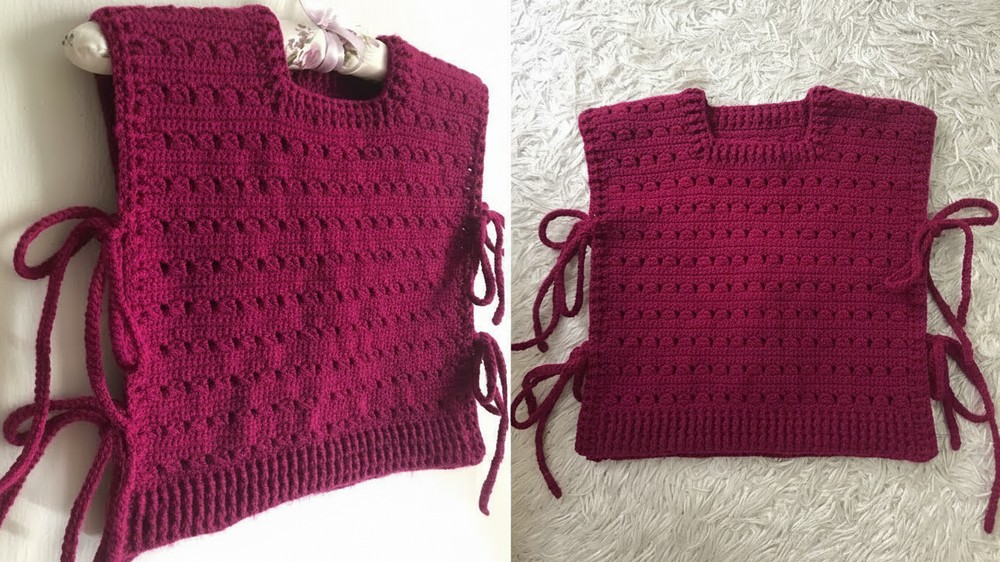
SPECIAL FEATURES
-
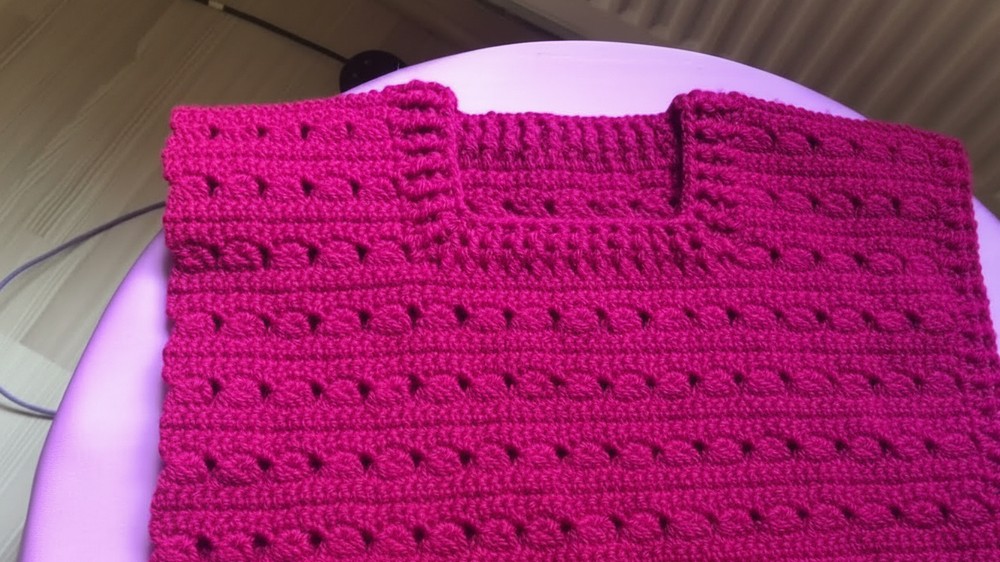
Post-Stitch Ribbing: The hem, armholes, and neck use a structured ribbing created with alternating front post and back post double crochet stitches.
-
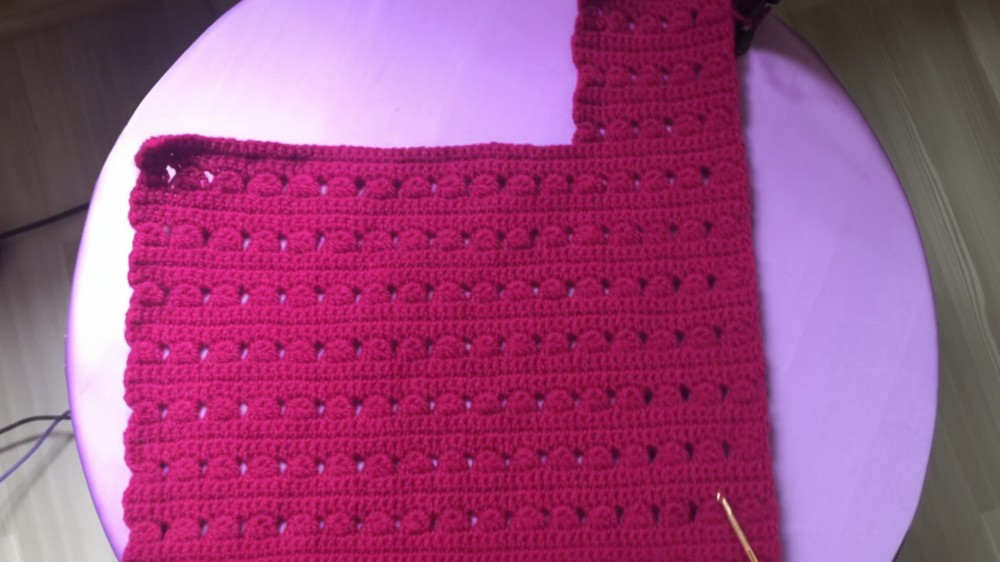
Textured Body Stitch: The main body features a repeating pattern of gathered, elongated stitches (resembling a puff or bobble) separated by simple rows of single crochet, which gives the fabric a dense, warm texture.
-
Simple Construction: The vest consists of two main rectangular panels (front and back) that you seam together, simplifying the construction process.
LEVEL OF DIFFICULTY
Intermediate
You should be comfortable with basic stitches, especially Double Crochet (DC) and Single Crochet (SC). The intermediate level is necessary for successfully executing the post-stitch ribbing (FPDC/BPDC), maintaining the multi-row pattern repeat, and accurately shaping the neckline.
TUTOR'S SUGGESTIONS
-
Sizing Adjustment: To create a larger size, increase the initial chain count of 69 stitches, ensuring the number is still appropriate for the desired width. You can also adjust the number of pattern repeats to achieve the required length (the tutor made 9 repeats for the front and 11 for the back).
-
Neck Shaping: Use strategic decreases (working 3 post-stitches together) when crocheting the neck ribbing to ensure a smooth, rounded shape. If the neck looks sufficiently rounded after the first decrease row, you may choose to skip further decreases.
-
Armhole Edging: While the tutor added a simple border, consider using the FPDC/BPDC ribbing around the armholes for a more cohesive, finished look that matches the hem and neckline.
Crochet Sweater with Threads
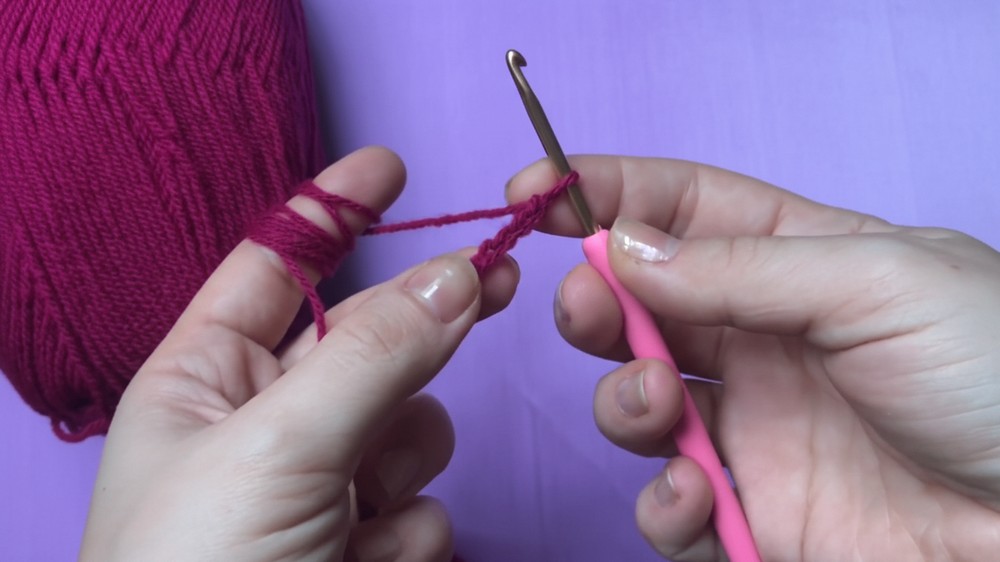
Such a sweater works great no matter where you go — you can pair it with jeans for a comfy everyday outfit or wear it over a dress for a gentle, artsy look. Because you can choose the thread or yarn yourself and adjust its thickness or looseness, you get a piece that fits your personal style and climate.
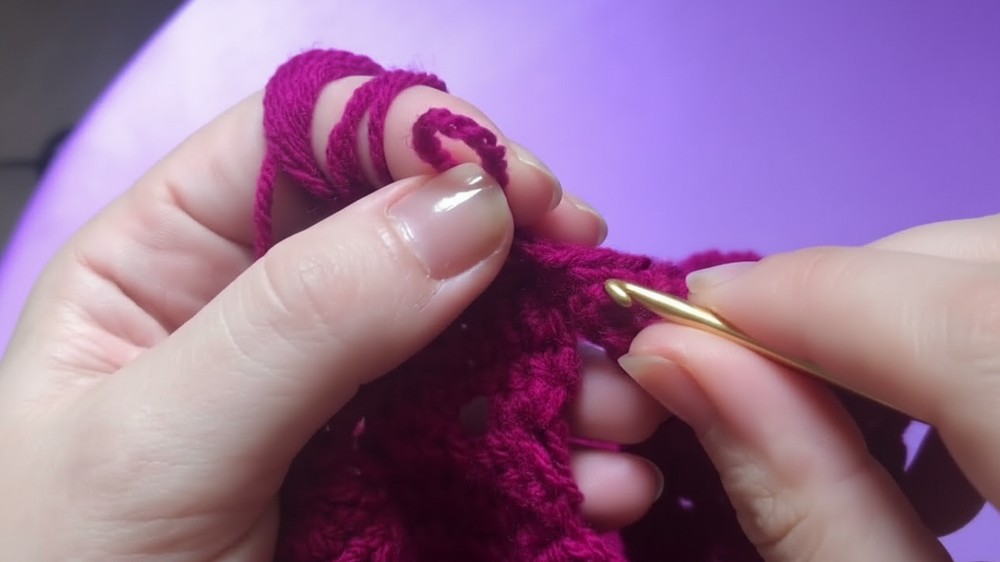
The mix of tiny loops and airy gaps creates a textured look that’s simple yet eye‑catching, and the result feels soft and comfortable against your skin.
The lightness of crochet also means that the sweater can be airy enough for cooler evenings without being heavy or bulky.
Beyond aesthetics, wearing or even making a crochet sweater adds a special value: the handcrafted feel carries charm and uniqueness, unlike mass‑produced clothes. The effort and time that go into stitching every loop make the final piece more meaningful. Overall, such a sweater blends softness, versatility and beauty offering a timeless garment that feels personal, stylish and truly comfortable.
CONCLUSION
You have successfully crocheted a cozy and textured vest with a professional ribbed finish. By mastering the core pattern repeat and employing post-stitch techniques for the edging, you have created a warm and stylish garment suitable for children, with the flexibility to size up for an adult version.
TIP
When working the neck ribbing, count your stitches carefully in the foundation DC row to ensure the stitch count is divisible by 2. This makes alternating FPDC and BPDC in the following rows easier and guarantees a neat, continuous rib pattern.